Routes & places
Your first Scotland trip: 7, 10 or 14 days
What deserves a place in your itinerary, what to leave for next time, and how to give each stop enough time.
A first Scotland trip works best when you choose a few places and give them enough time. With seven days, we would usually begin with Edinburgh and a manageable Highland route. Ten days gives you more scope for Skye or another focused extension. Fourteen days allows a slower circuit or an island stay, without making every day a transfer.
The plans below count arrival and departure as days: seven days means six nights, ten means nine, and fourteen means thirteen. They are suggested route structures, not confirmed packages. Flight times, hotel availability, season and your interests determine the final shape.
The places worth considering on a first visit
Edinburgh is a strong starting point for history, architecture and a first introduction to Scotland. Give it time beyond the castle alone: a neighbourhood walk, a museum chosen for your interests and an unhurried dinner can help you settle into the trip. Walking distances and cobbled or sloping streets should be considered if mobility is a concern.
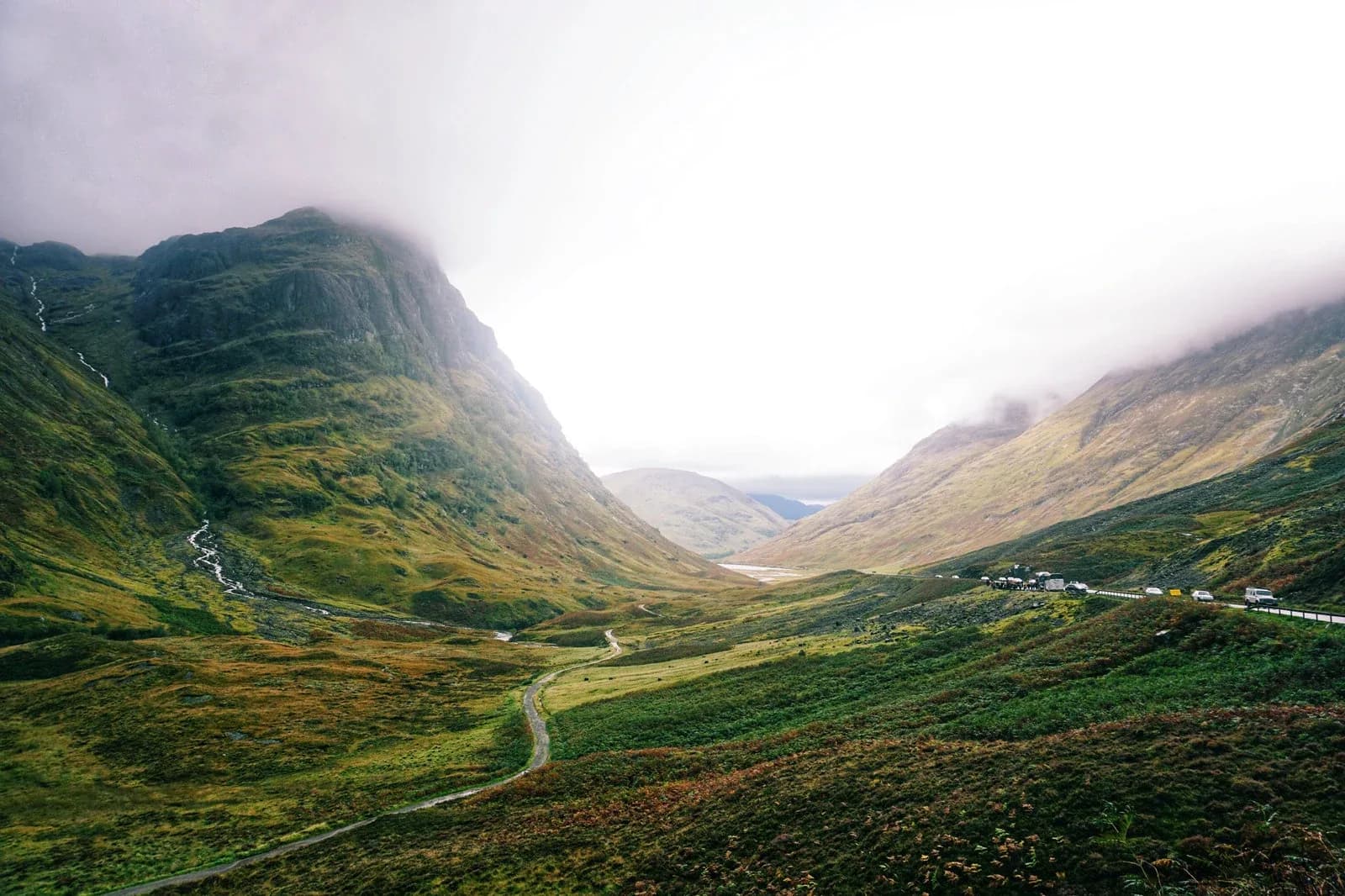
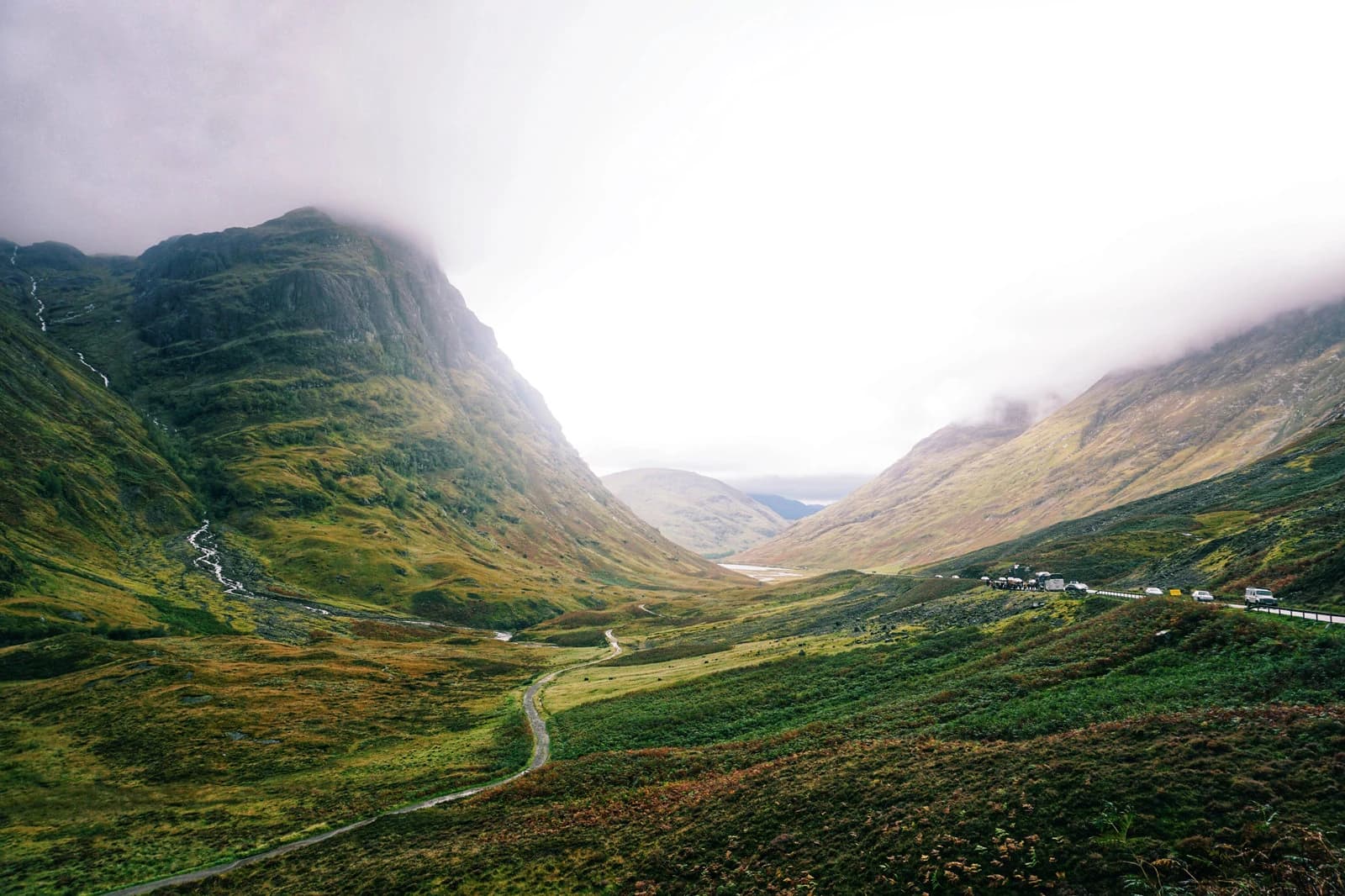
Glencoe offers a different scale of landscape. You do not have to undertake a demanding hike to appreciate it; the right stops and a suitable short walk may be enough. The important thing is to be there with time to look, rather than to pass through on a day already dominated by another destination.
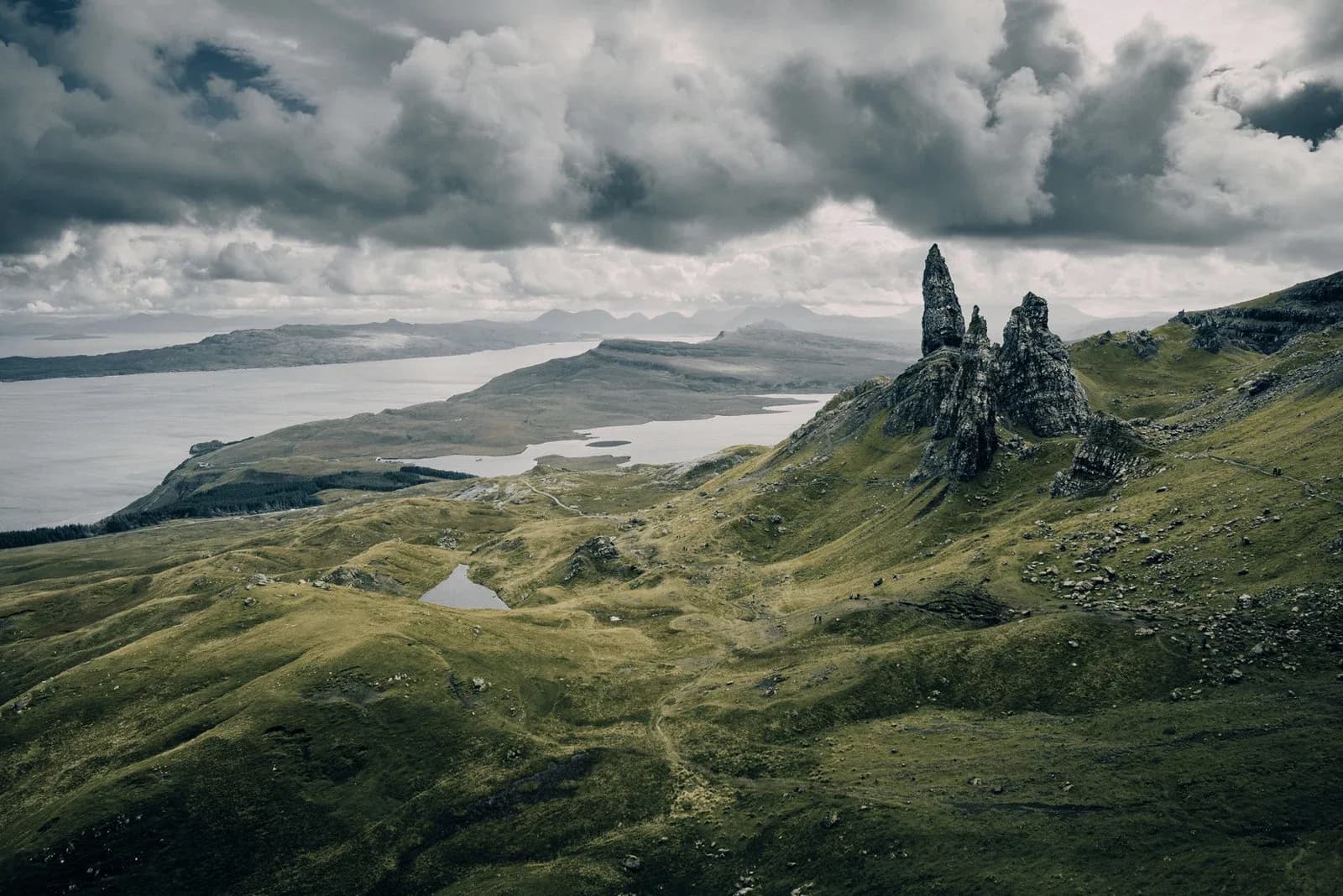
Skye is worth considering when its landscape is a genuine priority. It asks for a meaningful allocation of nights and realistic time on local roads. If you want both a relaxed trip and a full Skye visit, ten or fourteen days usually gives us a better starting brief than a very compressed week.
Perthshire, Stirling, the west coast and Fife can each offer a valuable part of a first route. They do not all need to appear together. Choose the places that support your interests: woodland and rural stays, a particular castle, a harbour town, golf, family history or time beside the sea.
Seven days: Edinburgh and the Highlands
For a six-night first visit, our suggested structure uses three two-night bases. It gives you a city introduction, Highland scenery and a final stop that makes the journey back to your airport manageable. It deliberately leaves Skye out rather than squeezing it between long drives.
| Day | Suggested focus | Overnight base |
|---|---|---|
| 1 | Arrive, settle in and take a gentle local walk | Edinburgh |
| 2 | Edinburgh history, neighbourhoods and a booked main visit | Edinburgh |
| 3 | Travel west, with a selected stop around Stirling or Loch Lomond | Glencoe area |
| 4 | Glencoe scenery and an activity suited to your interests | Glencoe area |
| 5 | Travel to Perthshire with time for stops on the way | Perthshire |
| 6 | Woodland, a castle or a relaxed country day | Perthshire |
| 7 | Transfer to the airport with a flight-appropriate buffer | Departure |
If your flight leaves early on day seven, replace the last Perthshire night with a stay closer to the airport. That is a route improvement, not a failure to complete the itinerary. A comfortable departure morning matters more than preserving a neat-looking diagram.
This version suits travellers who want a recognisable introduction without constant packing. If Edinburgh is not your priority, spend fewer nights there and give the countryside more room. If ancestral research is the reason for travelling, choose the family location first and build a smaller circuit around it.
Ten days: make room for Skye
With nine nights, a westward route can give Skye a proper stay. The outline below reserves three nights there. That leaves two full island days between arrival and departure, with scope to adjust the order of visits for conditions and energy.
| Day | Suggested focus | Overnight base |
|---|---|---|
| 1 | Arrival and time to settle | Edinburgh |
| 2 | An Edinburgh day built around your interests | Edinburgh |
| 3 | Travel through the central belt towards the western Highlands | Glencoe area |
| 4 | Scenery, local history or a suitable outdoor activity | Glencoe area |
| 5 | Travel to Skye, treating the journey as part of the day | Skye |
| 6 | One part of Skye explored at a considered pace | Skye |
| 7 | A second island day, with weather-sensitive plans kept adaptable | Skye |
| 8 | Return to the mainland and continue towards Perthshire | Perthshire |
| 9 | A slower final countryside day | Perthshire |
| 10 | Airport transfer and departure | Departure |
The Skye-to-Perthshire transfer is a substantial travel day. If long vehicle journeys do not suit you, discuss a different return route or an extra stop, accepting that this takes a night from elsewhere. Alternatively, replace Skye with a closer west-coast base and keep the trip more compact.
Do not try to cover all of Skye in one full day merely because a map puts its attractions on the same island. Pick a manageable area, account for walking and parking, and leave time for lunch. The most rewarding day is not necessarily the one with the most pins.
Fourteen days: a broader trip without rushing
Thirteen nights give you room to deepen the route. Our example adds a longer central-Highland stay and a final Edinburgh night. It does not automatically add several islands or the entire North Coast 500. More days can mean more time in places, rather than more places.
| Days | Suggested focus | Nights |
|---|---|---|
| 1–3 | Arrive and explore Edinburgh with one free afternoon | 3 in Edinburgh |
| 4–5 | Travel west and spend a full day around Glencoe | 2 in the Glencoe area |
| 6–8 | Skye, with two full island days | 3 on Skye |
| 9–11 | Return inland for a Highland base and interest-led days | 3 in the central Highlands |
| 12 | Travel south through Perthshire, with a selected stop | 1 in Perthshire |
| 13 | Return to Edinburgh and enjoy a relaxed final evening | 1 in Edinburgh |
| 14 | Transfer and departure | No overnight stay |
Use the central-Highland days for what matters to you: local history, woodland, a distillery experience or time outdoors. Do not fill them automatically. The plan is a framework, and your accommodation location should support those activities rather than create unnecessary drives to them.
If Mull, Islay or the Outer Hebrides are your priority, we would usually redraw part of this route instead of attaching that island to the end. Ferry times, available rooms and a sensible return to the airport need to shape the plan together. An island-focused fourteen days may look quite different from this mainland-and-Skye circuit.
Decide what to leave for next time
A first trip is not an exam in Scottish geography. It is perfectly reasonable to leave Loch Ness, St Andrews or a famous filming location out when they do not fit the journey you want. An attraction can be worthwhile and still be the wrong choice for this particular route.
List three things you would be disappointed to miss, then three that would simply be nice. This helps us protect the important parts when availability or travel distances require a choice. A long wish list without priorities often produces a trip that serves the map better than the travellers.
For inspiration, browse Highlights of Scotland or A Scottish Odyssey. Their published itineraries are starting points for a conversation; the day plans above are separate editorial examples and should not be mistaken for those specific tours.
Allow for the travel you do not see on a map
A driving estimate does not include collecting luggage, checking out, finding a viewpoint, taking photographs or sitting down to lunch. Even a relatively straightforward transfer can fill much of a day once you include the reasons you are making the journey.
On rural and island roads, a short distance can take longer than you expect. VisitScotland’s driving advice covers practical considerations including single-track roads and parking. If you are self-driving, read that guidance before finalising an itinerary that depends on optimistic arrival times.
A private driver-guide can take the navigation and driving from your day, but cannot shorten the geography. We still need a realistic route, appropriate breaks and enough time at each stop. A better vehicle should make the journey more comfortable, not justify an exhausting schedule.
Book the experiences that anchor the trip
Once the route makes sense, identify its fixed points. A special dining reservation, a particular course, a timed castle visit or a family-history appointment may determine the order of the days. Book those around a workable route rather than collecting reservations first and hoping they connect.
Check current Edinburgh Castle visit arrangements and the relevant CalMac information for ferry-based plans. Opening hours and services should be checked for your actual dates. Avoid using an old itinerary screenshot as evidence that an attraction will operate on the same pattern this year.
Keep an alternative for weather-sensitive activities. It need not be a disappointing fallback: a local visit, a comfortable lunch or time at your hotel can belong naturally in the trip. The goal is to protect the day’s enjoyment rather than force an outdoor plan at any cost.
Shape the route around the people travelling
Tell us how long you enjoy walking, whether you prefer early starts, and how you feel about changing hotels. Mention steps, luggage, dietary needs and anything else that affects daily comfort. Those details influence hotel and activity choices as much as a list of destinations does.
Our traveller stories show different reasons for visiting, from family adventures to heritage journeys. Jeffrey and Kate’s return visit is a useful example of looking at a familiar country differently, while the McCormick family’s story begins with several interests that needed to fit one shared trip.
Start with a route you can enjoy
Choose your available nights, your three priorities and the pace that feels comfortable. Then use our seasonal guide to check whether your preferred dates support the plan. If budget is the next question, the private-tour cost guide explains what changes a quote.
The strongest first itinerary leaves you feeling that you spent time in Scotland, rather than passed through it. A few well-chosen bases, selected experiences and room for an unplanned stop give us a better foundation than a promise to see everything.